Less than an hour's drive from Marrakech, the land empties out. Olive groves and suburbs give way to bare, folded hills the colour of sand and clay, with the High Atlas lined up on the horizon. This is the Agafay desert, the easiest way to get a taste of desert scenery without the long road to the Sahara. This guide explains what Agafay is (and what it is not), when to go, which activities make sense and how to prepare.
What Agafay is, and what it is not
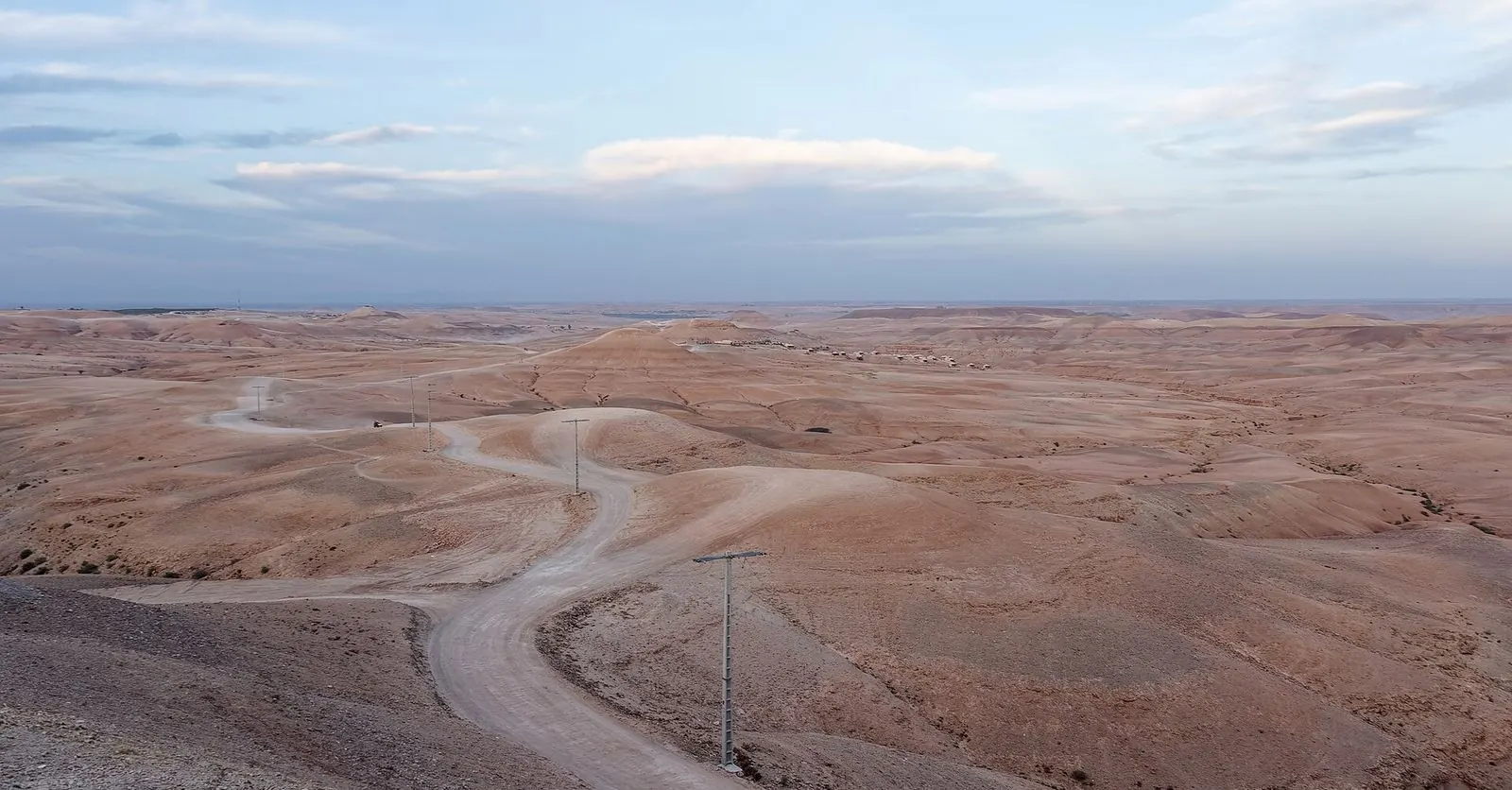
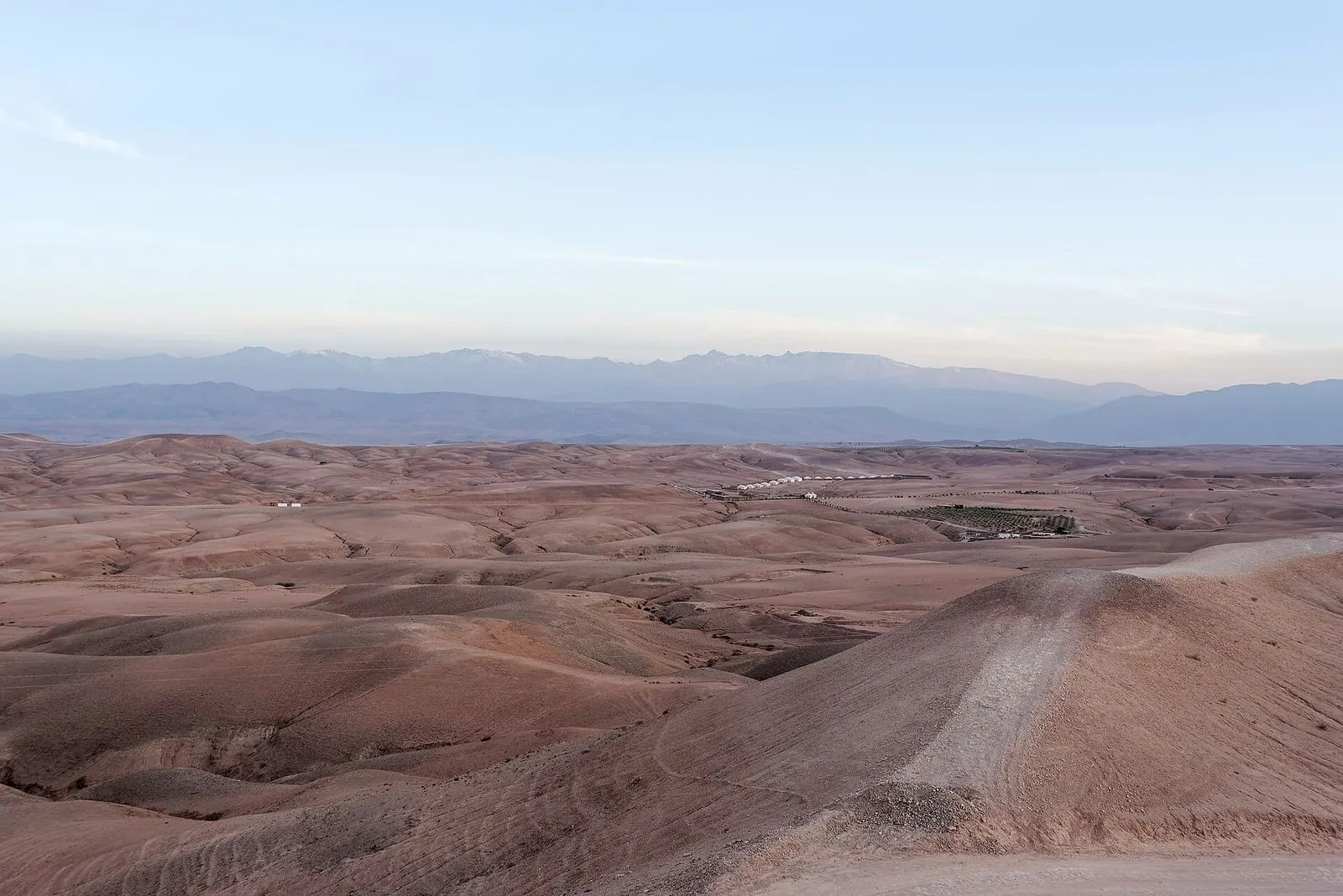
Agafay is a reg, a stony desert: a plateau of rock, gravel and dry earth cut by ravines and dry riverbeds. It lies roughly 30 to 40 km south-west of Marrakech, between the city and the foothills of the High Atlas, close to the reservoir of Lalla Takerkoust.
The most important thing to know before you go: Agafay has no sand dunes. If you picture the tall orange dunes seen in photos of the Sahara, those are at Erg Chebbi near Merzouga or Erg Chegaga beyond M'Hamid, many hours' drive away. Agafay's appeal is different: a lunar, almost silent landscape of hills and plateaus, wide skies and, on clear days, the Atlas mountains behind it. Many visitors find it more striking than they expected, precisely because it feels so empty so close to a busy city.
How far is it from Marrakech?
Depending on where you start and which part of the desert you head for, the drive usually takes 45 minutes to an hour. The road crosses the Haouz plain, with olive groves and small villages, before climbing gently onto the plateau. That short distance is what makes Agafay work as a half-day outing or a single night away.
When to go
Agafay can be visited all year, but conditions change a lot with the seasons.
- October to April is the most comfortable period. Days are mild to warm and the light is clear. The Atlas peaks are often white with snow from winter into spring, which makes the views spectacular.
- May to September brings serious heat. Midday on the plateau can be scorching, with almost no shade. In summer, plan activities for the late afternoon and sunset, or early in the morning.
- Winter nights are cold. If you sleep in a camp between December and February, pack warm layers, even if the afternoon felt like spring.
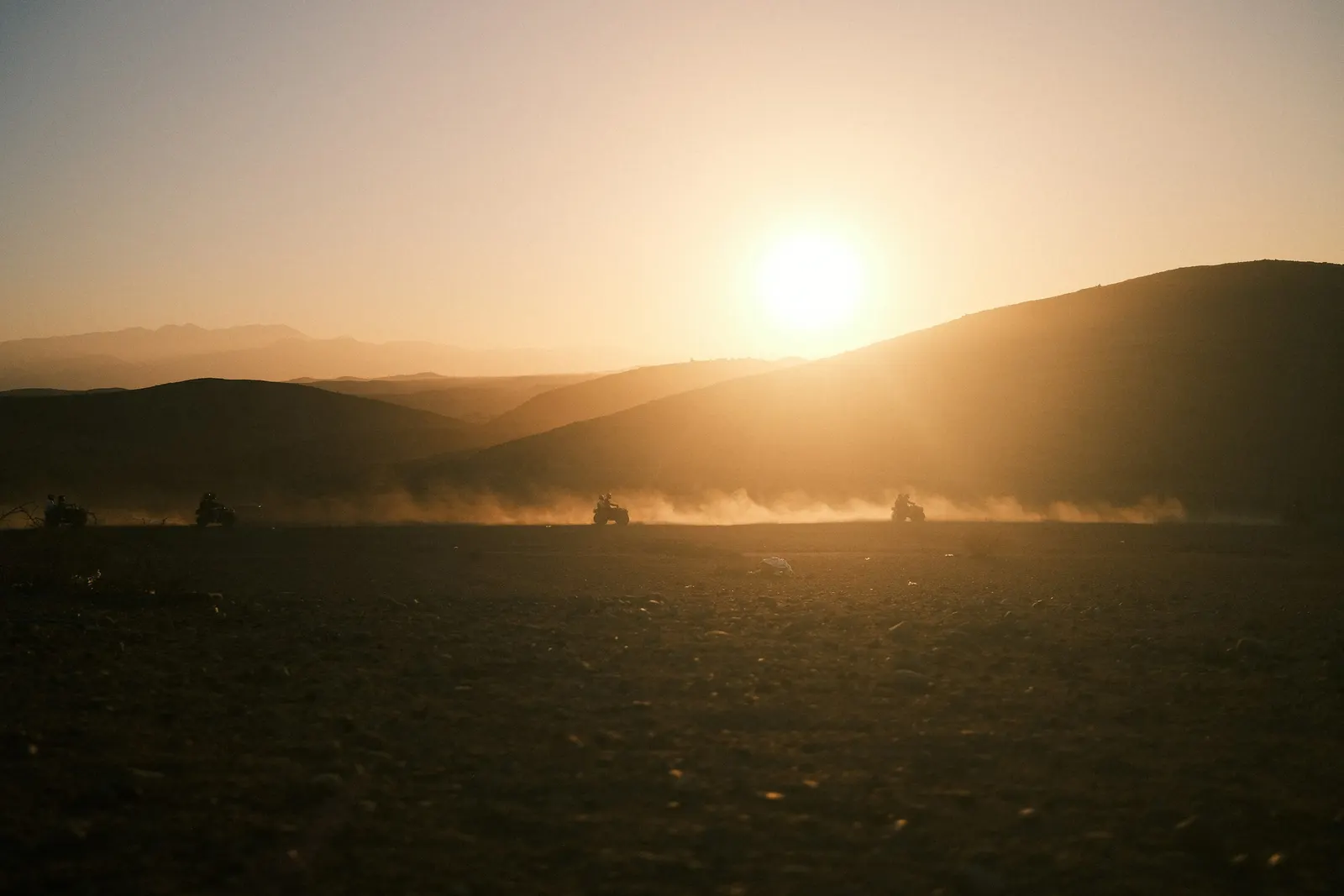
Whatever the month, the best time of day is the last two hours before sunset. The low sun turns the hills gold and pink, the temperature drops and the shadows bring out every fold of the land.
What to do in Agafay
Quad biking
Quad biking is the most popular activity. After a safety briefing, you follow a guide along stony tracks, across dry riverbeds and over the hills. On the Morohaven quad excursion, the ride itself lasts two hours on a 300 or 450 cc quad, with helmet, gloves and goggles provided and a professional guide adapting the pace to each rider. Mint tea is served, hotel or riad pickup in Marrakech is included at the time you choose, and the whole outing takes three to four hours.
Buggy rides
A buggy is more stable than a quad and seats two side by side, so it suits couples, friends or anyone who prefers a steering wheel to handlebars. Our buggy outing includes two hours of driving across the stony tracks and arid hills to an oasis. Each buggy takes one or two people, and the equipment, the guides, tea and the return transfer are included.
Camel rides at sunset
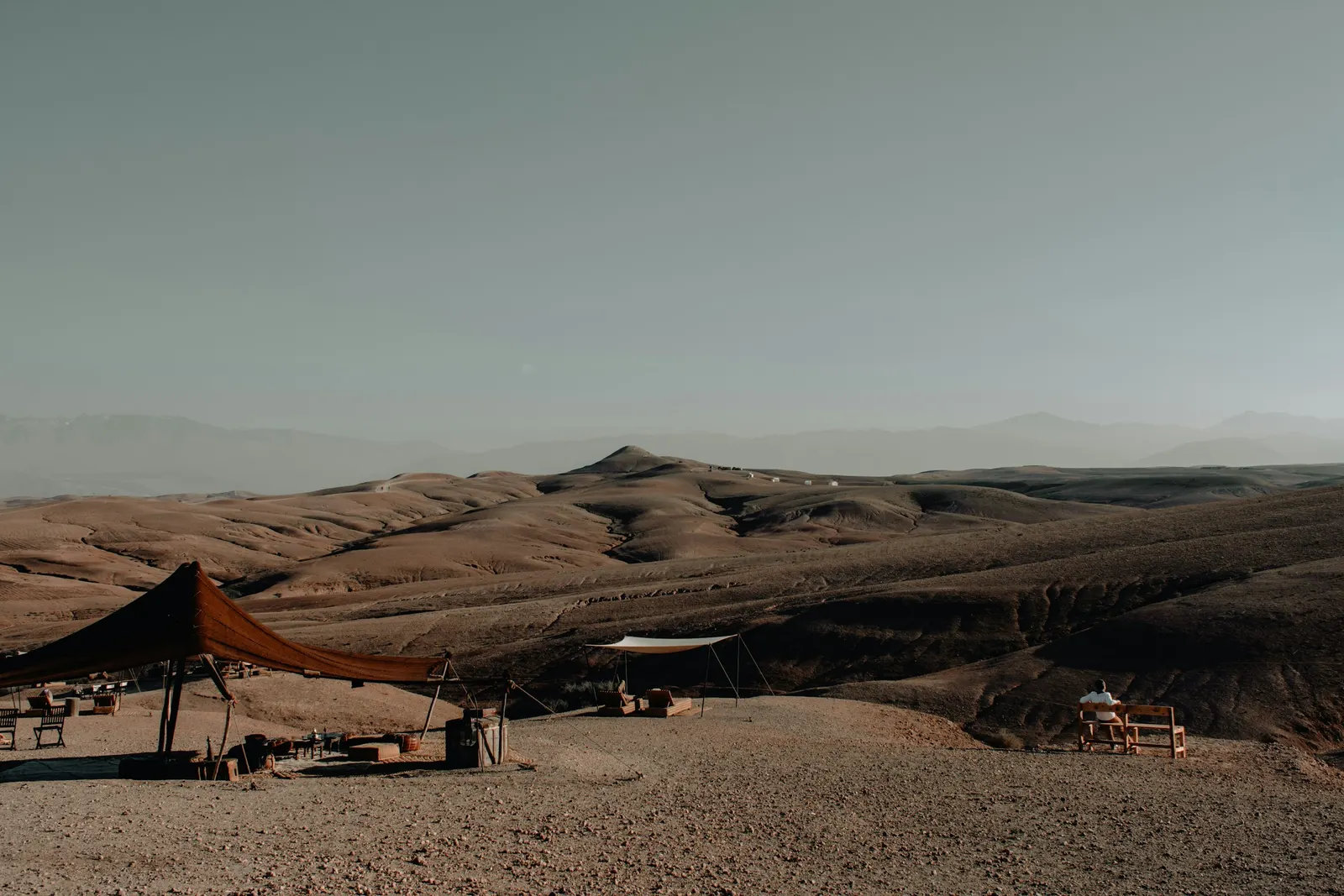
For a calmer experience, a dromedary ride at sunset is hard to beat. Our sunset excursion starts with mint tea under a nomad tent, followed by about an hour on a dromedary along desert trails, wearing a cheich, the Saharan scarf. You then have free time to watch the sun go down over the hills.
A night in a desert camp
Agafay is dotted with camps, from simple Berber-style tents to upscale lodges with pools. Staying overnight lets you see the desert at sunset, under the stars and at dawn, which are its finest moments. Morohaven's overnight programme leaves Marrakech at 09:00 and includes a night in a camp of spacious caidal tents, a one-hour dromedary ride, two hours of quad biking, dinner and breakfast, and a short visit to Lake Lalla Takerkoust the next morning.
Request your booking — we confirm availability by email/WhatsApp.
Lake Lalla Takerkoust
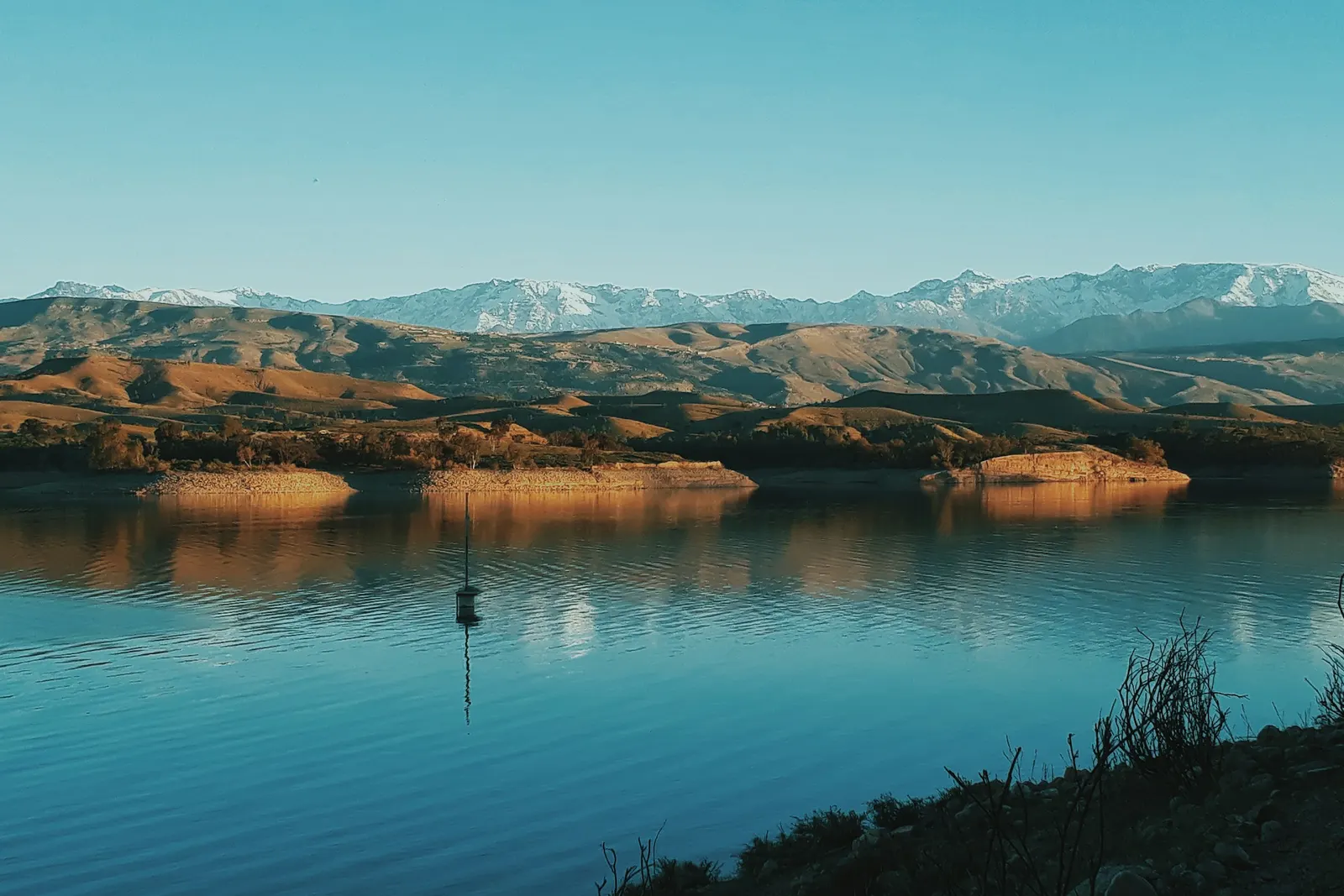
On the edge of the desert, Lalla Takerkoust is a reservoir held back by a dam and fed by water from the Atlas. Its shores are popular with Marrakech families at weekends, and the contrast between the blue water and the dry hills is beautiful. Our camel ride can end with a short stop there, and the overnight camp includes a visit the next morning.
What to expect on the day
- Dust. Tracks are dry and dusty, especially on quads and buggies. Goggles are provided on our motorised outings; a scarf or buff over your nose and mouth helps a lot.
- Sun and wind. There is very little shade. Bring sunscreen, sunglasses and a hat, and drink plenty of water.
- Clothing. Wear closed shoes and long trousers or light long sleeves; they protect you from sun, dust and scratches. Add a warm layer for the evening, in every season.
- Food and drinks. Our half-day activities include mint tea but not meals; overnight guests have dinner and breakfast at the camp.
- Physical level. Quads and buggies need no previous experience, but the tracks are bumpy. If you have back problems, are pregnant or have any health concern, a camel ride or a camp stay is the gentler choice; ask us before booking.
How Agafay fits into a Marrakech trip
Because it is so close, Agafay slots easily into a short stay. A sunset camel ride or a quad session takes half a day, so you can spend the morning in the medina and still be back for dinner. If you only have three days, our Marrakech 3-day itinerary keeps the third day for Agafay or the Atlas. For quieter corners in and around the city, read Marrakech off the beaten path.
If Agafay gives you a taste for desert landscapes and you have more time, the Sahara dunes are the next step. Our guide Merzouga vs Zagora compares the two classic desert trips from Marrakech, honestly, including the hours on the road.
FAQ
Are there sand dunes in the Agafay desert?
No. Agafay is a stony desert of hills, gravel and plateaus. For large sand dunes you need to travel to Merzouga (Erg Chebbi) or the Zagora region, which means a trip of at least two days from Marrakech.
How long does it take to get to Agafay from Marrakech?
Usually 45 minutes to an hour by road, depending on your starting point and the part of the desert you are going to.
What is the best time to visit Agafay?
October to April for comfortable temperatures, and the late afternoon at any time of year for the light and the sunset. In summer, avoid the middle of the day.
Is a night in an Agafay camp worth it?
Yes, if you want the desert at its quietest: sunset, a starry sky away from city lights and the soft light of early morning. It also makes the trip feel like a real break while staying close to Marrakech.
Can I combine Agafay with Lake Lalla Takerkoust?
Yes. The lake is a few kilometres from the desert. Our sunset camel ride can end with a short visit to the lake, and the overnight camp includes a stop there the next morning.